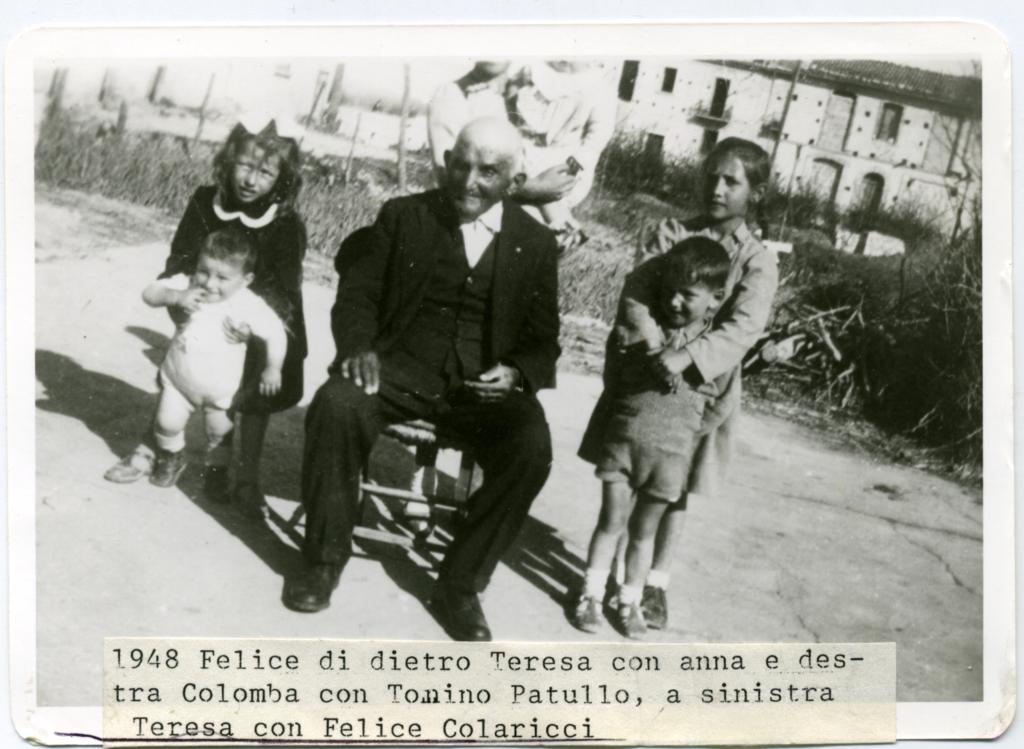
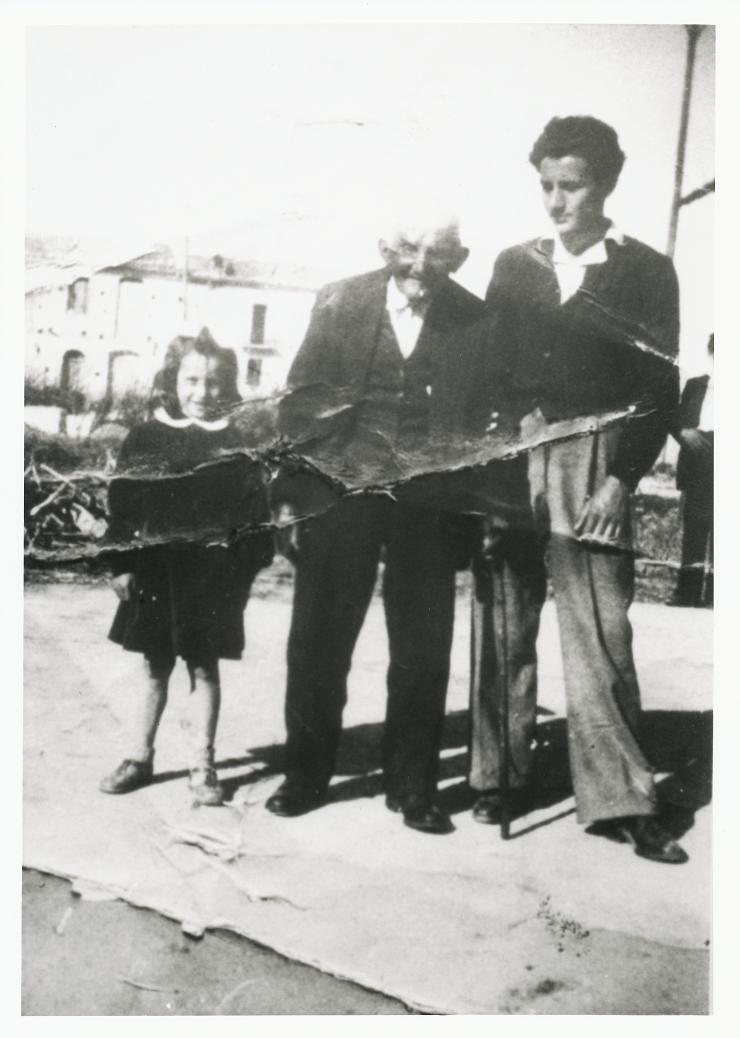
Emigration and Work in America
Felice is known to have emigrated twice to the United States. The first time, in 1883/84, was on a large sailboat travelling from Naples. He was apparently unsure as to whether he would be fed or not, and travelled with a large sack containing meats, cheese, and a few large forms of bread. The second ( or possibly third ) time, this time recorded in records at Ellis Island, was 1 April 1893. Both his sons, Angelo and Filippo, told that he was in America for 11 years before returning to Italy, although a grandson also tells that Felice first emigrated first in 1878, remaining for 5 years, but no supporting records from Ellis Island can be found.
His son Angelo, told that he worked as a "mine blaster, and interpreter". Felice is also said to have worked in building a railroad which ran up to Duluth Minnesota ( difficult to tell exactly which line, as there were many railroads under construction in and around Duluth in the 1880s ). From this time, he spoke of how bitterly cold he found it: he and other workers would sleep in boxcars, and would wake often in the morning with their hair frozen to the floor.
During this time, he developed some difficulty seeing, and was convinced by someone in America to have both of his ears pierced as a remedy for his failing eyesight. This was most unusual, and he continued to wear the 11-sided gold earrings even after his return to Italy. The earrings were eventually passed to one of his daughters upon the birth of one of his granddaughters. ( Others remember that at one point late in the year, he was asked to ford a river in order to bring a cable or line to the far side of the river. The result was that he contracted a pneumonia, and as part of his recovery he had his ears pierced and wore a set of 11-sided silver earings. Others still remember the earrings as a cure for his hardness of hearing. )
Return to Italy
He was called back to Italy by his father, who suggested that there was a worthwhile piece of property to purchase.
( After his 1st trip to the United States, he left some real estate in the care of his nephews, Carmine and Andrew Colariccio. Upon his return from either this 1st trip, he attempted to collect the property, upon which the nephews assaulted him with keys, leaving marks in the side of his head ).
So, at 38 years of age, he returned to Italy and married the much younger Angela Pitoscia. This likely occurred no later than 1895, as their first child Rosa was born in 1896. He would eventually father 10 children, only 5 of whom lived on to adulthood. His youngest son, Mario, was born when Felice was 62 years of age.
In 1923, his wife Angela, died of appendicitis. His eldest son Angelo had immigrated to the US a few months earlier, and Felice was in his mid 60s, along with children ranging from 15 to 4 years of age. Thankfully, his daughter-in-law Concetta remained with the family until 1928 and acted as a surrogate mother, helping to raise her brother and sister-in-laws.
Character
He was said to have been a litigious person, and at the time of his wife's death, had a number of court cases on the go. One was a dispute with a relative that he had accused of being a thief : stone that was being used to construct the city hall at the time also appeared in a building owned by some relation of this relative. Others were right-of-access disputes to properties (possibly Monteverde) he had with his brothers or cousins. ( Carmine's memory ). He is also said to have trained his animals to take commands in English, so that they would not respond to others in Bojano.
By many indications, Felice was a difficult person. A disagreement with his eldest son, Angelo, led to Angelo leaving for America. Felice disagreed with Concetta's choice of husband ( Alessandro Patullo ), and he refused to attend the wedding or speak to her for a year or so afterwards.
Near the end of his long life, he managed to get himself arrested and for a short period thrown in jail. The issue was over a shed in the front of his house, which apparently protruded too far in the laneway. The Fascist mayor of the town had ordered that this awning be torn down, something which Felice refused to do, one one occasion chasing away the officers with his cane. He was carted off to the local jail along with Teresina, his daughter-in-law, until the matter was resolved.
His long life might be attributed to his daily discipline. His daughter-in-law Concetta Prioriello told of how he was very disciplined in all activities of his day, always eating, and drinking in moderation, setting limits to the amount he would work each day, and keeping rigidly to his schedule. His grandson Carmine Patullo remembers that every morning, for his health he would eat a clove of garlic, along with a big glass of water.